

India’s Biggest Banking Deal Explained

Our aim through TVS Weekly is to break down financial stories and concepts simply, explaining what happened and why it matters to you.
No jargon, no drama, just stuff that actually makes sense!
Curious? Get more from us on our Instagram, WhatsApp, LinkedIn, or YouTube. Our 1 Million+ family awaits you!
In this week’s newsletter, we will be learning:
About the Emirates NBD and RBL Bank deal.
My Advice on making your resume stand out from your peers.
What is Earnings Surprise.
Market Kya Keh Raha Hai Sir?
Imagine a wealthy businessman from Dubai visits India during October, when there are festival vibes all around.
He is impressed by the market and decides to make big purchases.
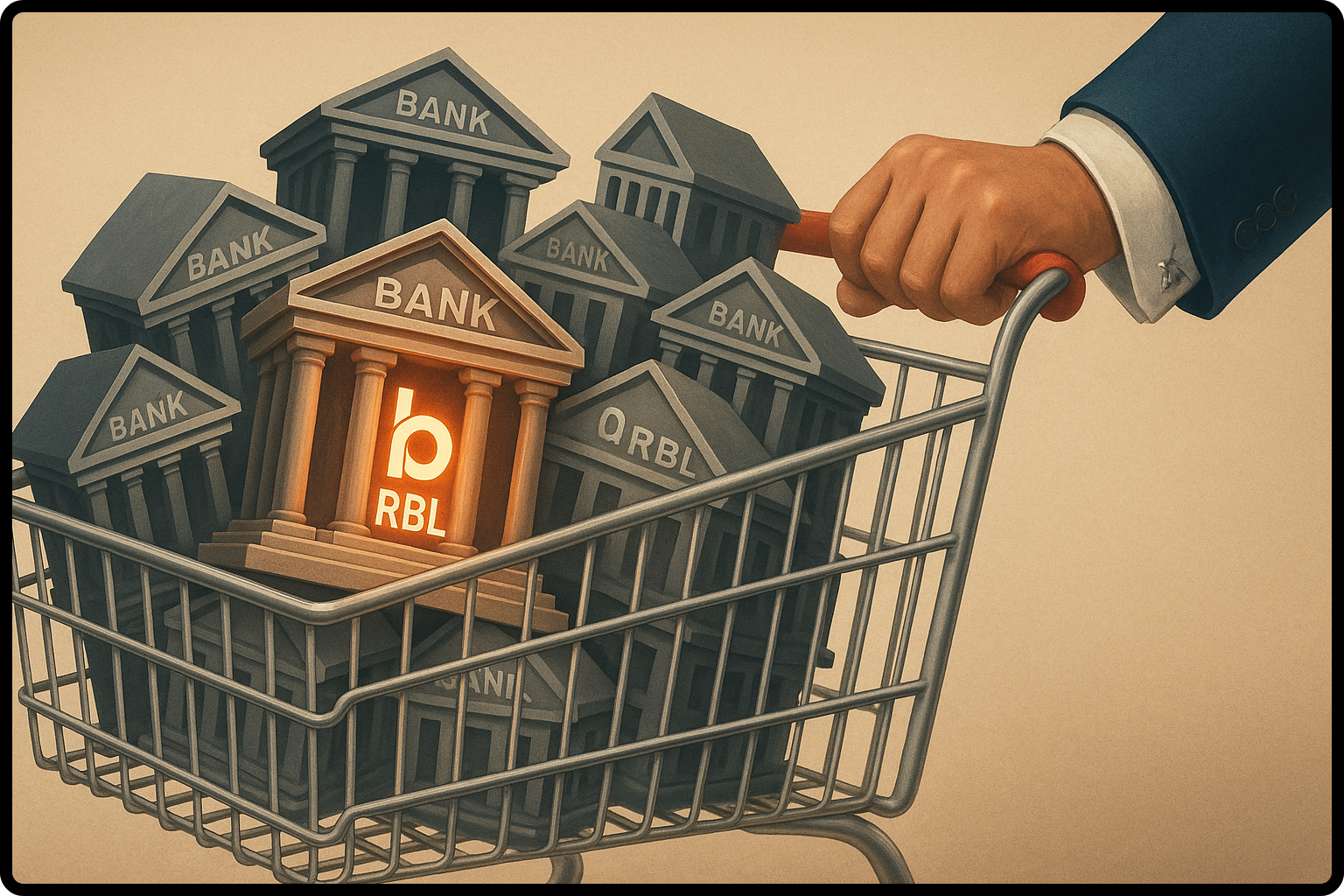
But instead of buying sweets and jewellery, he wants to buy an entire bank!
Yes, you read that right.
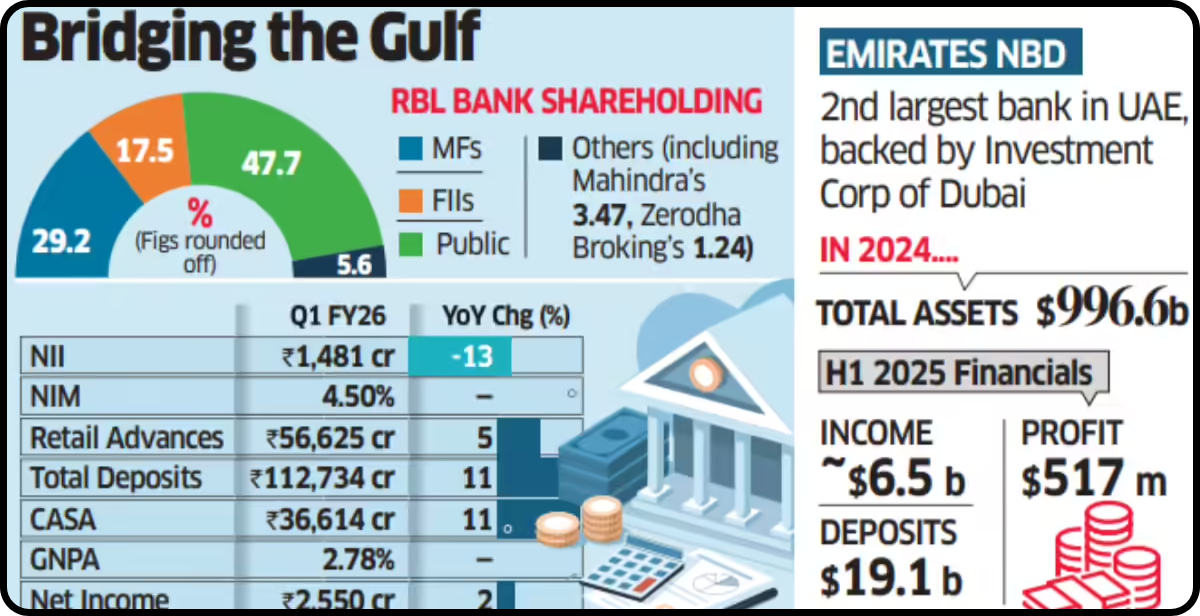
On October 18, 2025, Dubai-based Emirates NBD bank announced that it wants to acquire a 60% stake in RBL bank for ₹26,853 crore.
While the numbers look massive, it involves great learning for you in deal structuring, why this deal is happening, and a broader theme around India’s banking sector.
So, let’s dive in.
What is the Deal?
Emirates NBD, which is one of the largest banks in Dubai, is set to acquire a 60% in RBL Bank, marking the largest ever FDI deal in India’s financial services sector.
On 12th November, the shareholders of RBL Bank even approved this acquisition with 98.8% votes.
As the deal gears up to proceed forward, it is being done in two distinct stages, both priced at ₹280 per share.
And understanding it gives you an edge.
The Deal Explained
The first stage involves Emirates NBD investing ₹26,853 crore for a 60% stake through a preferential issue.
In simple terms, a preferential issue means the company creates and allots new shares to a specific investor.
Here, RBL is not selling existing shares to Emirates NBD but creating new shares (95.9 crore).
This matters because the existing shareholders will retain their ownership, and just the equity base will expand.
The second stage is a mandatory open offer.
So, SEBI regulations require that once an acquirer crosses 25%, it must offer to buy up to 26% additional shares from public shareholders at the same price per share (₹280).
The open offer will begin on 12 December and end on 26 December, where the existing shareholders will have the choice to stay or exit, ensuring investor protection.
And the open offer is done first because foreign ownership is capped at 74% for private banks in India.
So once the open offer is completed, then the management can adjust the preferential allotment so that the shareholding remains within regulatory limits.
Apart from this, Emirates NBD has 3 existing branches in India, which will be merged into RBL Bank.
Why did Emirates want to acquire RBL?
Now, as we have understood how the deal is structured, it is also crucial to understand why it happened in the first place
And we are talking $3 billion (₹26,853 crore) here, which is not a small number.
Grabbing the Opportunity
Emirates NBD has been operating in India with 3 branches since 2017, in a branch mode.
So foreign banks in India operate in a branch mode, which limits their flexibility and branch expansion.
To gain full operational flexibility in India, foreign banks must function as a subsidiary. This is possible only by setting up, acquiring, or merging with a local bank.
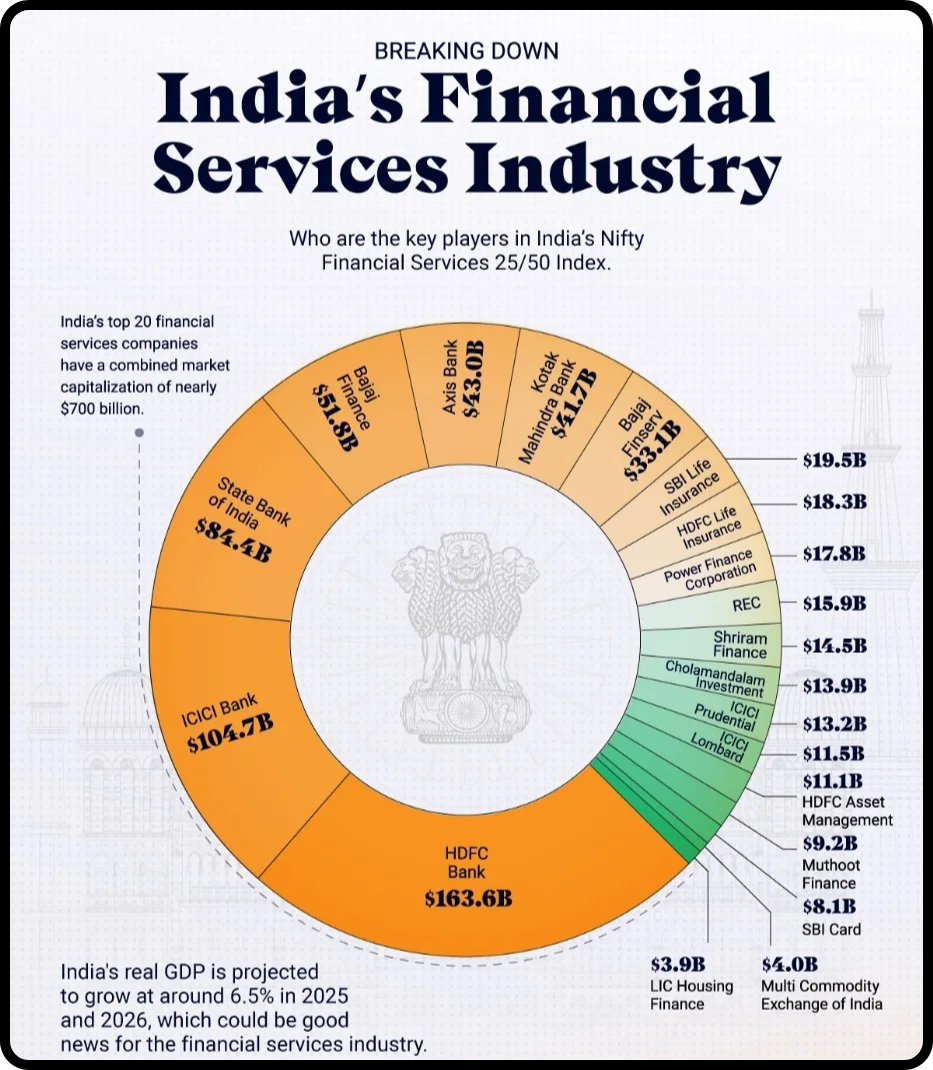
Meanwhile, India’s banking and financial sector is expanding rapidly, with credit growth at 9.5% as of June 2025, and BFSI contributing 27% to India’s GDP.
While the numbers look great, to take part in this, Emirates NBD required help from a local player to leverage this.
That’s where RBL Bank comes in
RBL Bank offers them a strong geographic reach of 560+ branches, along with providing them with a strong customer base of more than 15 million people.
These are numbers and capabilities that take years to build.
So Emirates isn’t just buying a bank, but they are buying time and scale instantly.
The RBL side of the Story
While we talk about Emirates NBD, we must also understand RBL Bank’s side, and here’s where it gets interesting.
As per their recent quarterly results, their net profit was down by 20% YoY at ₹179 crores.

But what’s more concerning is their Cost to Income Ratio, which is at 70.7%

This simply means that ₹70 out of every ₹100 in revenue goes into operations, and this is a high number as compared to other banks.
To fix this, they needed capital along with banking expertise to help them operationally.
This is where Emirates NBD comes in, and the CEO of RBL Bank, Mr R.S. Kumar, seems equally excited for this partnership.
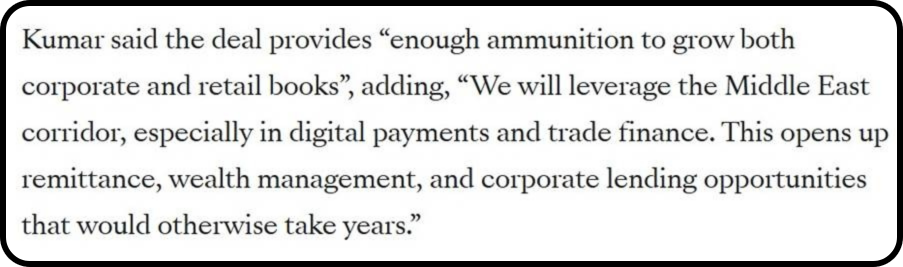
He even publicly said that he looks forward to seeing RBL Bank in the Top 5 private banks of India within the next 3-5 years.
The Broader Theme
As we speak about this deal, it looks like people, not just from Dubai, but globally, came to India for a shopping spree in October.
Emirates NBD isn’t Alone
October 2025 was not any random month, and during the festivities, India saw a shopping worth $16.8 billion in M&A and PE deals, which was a 134% spike from September.
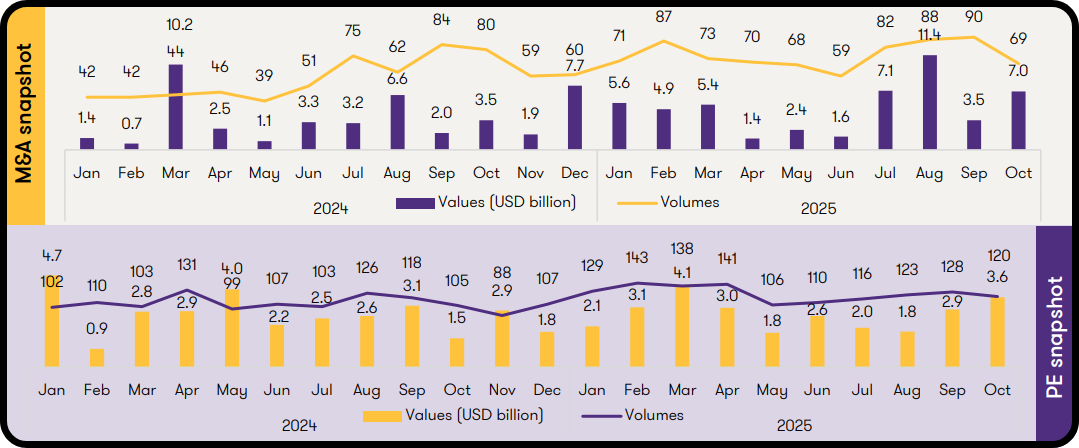
And banking and financial services led the race with 44% of the deal value, as three mega deals contributed largely
Emirates NBD – RBL Bank
Blackstone - Federal Bank
IHC (Abu Dhabi Fund) – Samman Capital
This just shows that this story is not about just one deal, but how foreign capital is systematically entering India’s banking and financial sector.
What Comes Next
Coming back to the Emirates NBD Deal, the shareholders of RBL had an EGM on November 12, 2025, and approved six critical resolutions.
Where they made approvals:
To merge Emirates NBD Bank’s India branch with RBL Bank,
Increase in the bank’s authorised share capital
Approved the issuance of preferential shares
These were some key approvals.
But RBI approval and Competition Commission clearance are still pending, which is critical.
And the full completion is estimated at 6-8 months from the October announcement.
But for now, both sides get what they came for, as one finds the growth capital and expertise it needs, the other gets a direct entry into India’s market.
Whether this shapes up as a smart globalisation play or becomes a cautionary tale, only time will tell.
Loved this breakdown? Subscribe below and get sharply explained finance stories delivered every week.
Kaam Ki Baat

Sir, how do I make my resume stand out from my peers?
Here’s what I told them:
A standout resume isn’t about having more.
It’s about having work that shows how you think, not just what you did.
Here’s a better way to approach it:
Depth over quantity. One well-done valuation or research project is stronger than five bullet points you can’t explain in detail.
Outcomes over responsibilities. Don’t just write what your role was; write what changed because you were there.
Show thinking, not tasks. Anyone can make a model. Few can explain why margins fell or what drives revenue. That’s what recruiters look for.
Self-initiated work is gold. A sector report, a company breakdown, or an investment memo that you created on your own beats a brand name with no real contribution.
Your resume should convey clarity, not just a list of activities.
Dalal Street Dictionary
Over the last few weeks, companies have been announcing their quarterly numbers, and one word keeps popping up everywhere: SURPRISE.
Positive surprise, negative surprise, but what does the market really mean by that.
An Earnings Surprise happens when a company’s actual profits differ from what analysts expected. If earnings are higher than forecasted, it’s a positive surprise, and if they’re lower, it’s a negative surprise.
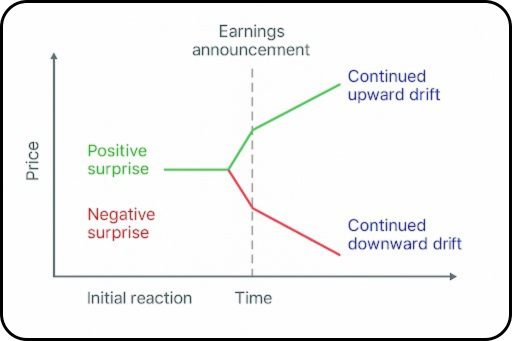
For instance, if analysts expected Infosys to post a ₹6,000 crore profit and it reported ₹6,800 crore, that ₹800 crore beat is an earnings surprise. But if the same ₹6,800 crore came when the market expected ₹7,200 crore, it would be viewed as a disappointment even though profits grew.
How to Spot It:
Compare quarterly results with analyst estimates
Watch stock reactions post-results
Why It Matters:
Drives Short-Term Volatility: Stocks often move sharply after surprises, as markets quickly adjust to new information.
Shapes Analyst Sentiment: Repeated positive surprises build credibility; consistent misses raise doubts about management guidance.
Explains Market Reactions: Sometimes stocks rise on bad numbers or fall on good numbers, because expectations matter more than the headline result.
In short, an Earnings Surprise is the gap between market expectations and a company’s actual results.
MEME OF THE WEEK

What Else Caught My Eye?
Ashok Leyland Expands Into Qatar.
SEBI Chief Says Investor Base May Double in 3-5 Years.
Government Approves 7,172 Crore Projects.
India Signs First Ever LPG Import Deal with the US.
Recommendations
Have you ever wanted to learn something new but felt overwhelmed by how much time it might take? In this TEDx talk, Josh Kaufman shares practical insights on skill acquisition that might surprise you. He breaks down the research behind learning, explaining how you can go from a complete beginner to reasonably competent in just 20 hours of focused practice.
Kaufman walks through four simple steps: break down the skill into smaller parts, learn just enough to practice and self-correct, remove distractions, and commit to consistent practice.
Whether you’re learning financial modelling, stock analysis, valuations, or investment strategies. This talk offers a practical framework that applies to almost any skill. It’s a great reminder that starting is often more important than waiting for the perfect moment.
Song of the Week
This is Parth Verma,
Signing Off.
Og verma g
Thanks for this post sir. Super simple explanation!