

The Copper Problem Nobody Sees


Our aim through TVS Weekly is to break down financial stories and concepts simply, explaining what happened and why it matters to you.
No jargon, no drama, just stuff that actually makes sense!
Curious? Get more from us on our Instagram, WhatsApp, LinkedIn, or YouTube. Our 1 Million+ family awaits you!
In this week’s newsletter, we will be learning:
How does Copper as a commodity work and its pricing
What is every nation running behind copper and India’s position in it.
My advice on understanding your passion about finance.
Market Kya Keh Raha Hai Sir?
PM Modi recently said something that most people ignored in the news cycle.
He pointed out that India has become a net importer of copper and urged the country to reduce its dependence on foreign copper.
But here is what the comment didn’t capture:
India’s copper problem is not really India’s problem
Every EV on the road, every solar panel on a rooftop, every data centre running AI, none of it works without copper.
And the world is now demanding far more of it than it can produce.
This is the story of copper.
Why it works the way it does, why the world wants it, and what that means for India.
Meet Doctor Copper
When people hear the word commodity, they picture something boring sitting in a warehouse somewhere.
But copper has earned a nickname among economists: Doctor Copper.
Not because it heals anything.
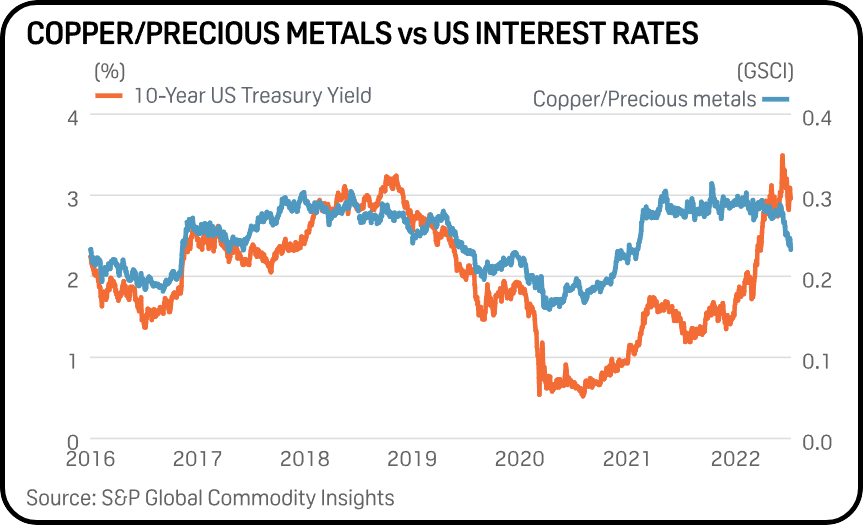
But because copper demand tracks the health of the global economy better than most indicators
When factories are running, cities are expanding, and new technology is being built, copper demand rises.
When things slow down, it falls.
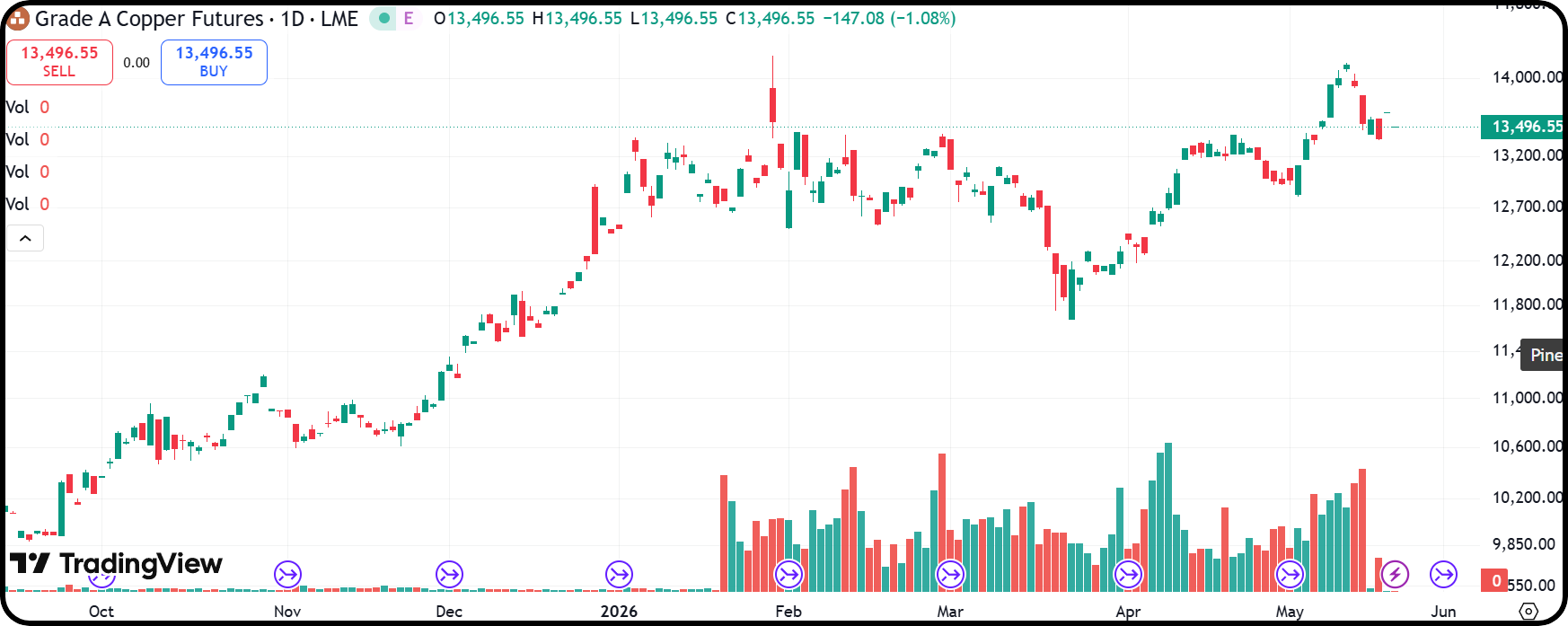
And copper’s price is set by the London Metal Exchange (LME), which has done so since 1877.
When that price rises, every Indian manufacturer pays more for copper.
India has no say in this. We simply accept whatever the world decides.
In economics, this is called being a price-taker.
Prices hit an all-time high of above $14,000 per tonne in January 2026.
And Goldman Sachs forecasts $15,000 per tonne by 2035.
But why is copper getting so expensive in the first place?
So the world has realised that the future they want to build requires enormous amounts of this metal.
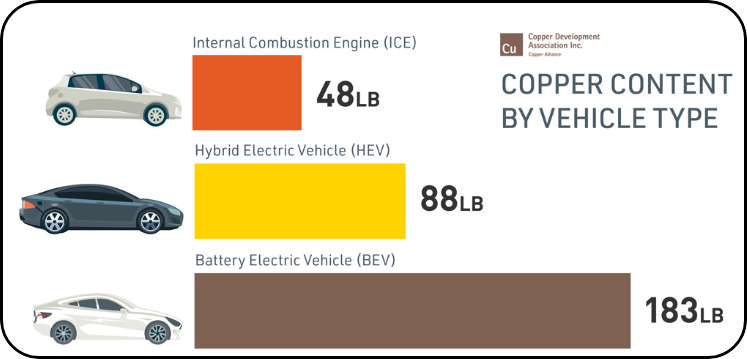
A regular petrol car uses about 23 kg of copper.
An electric vehicle uses 83 kg, nearly four times as much.
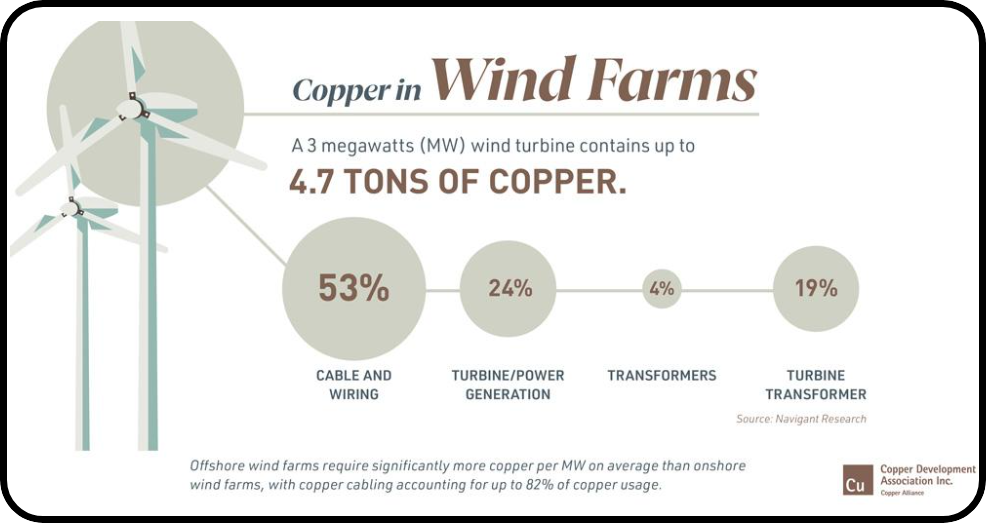
An onshore wind turbine contains 4 to 5 tonnes.
And one AI server rack, roughly the size of a large refrigerator, needs nearly 2 miles of copper cabling inside it.
Wood Mackenzie projects that global copper demand will grow 24% to 42.7 million tonnes by 2035.
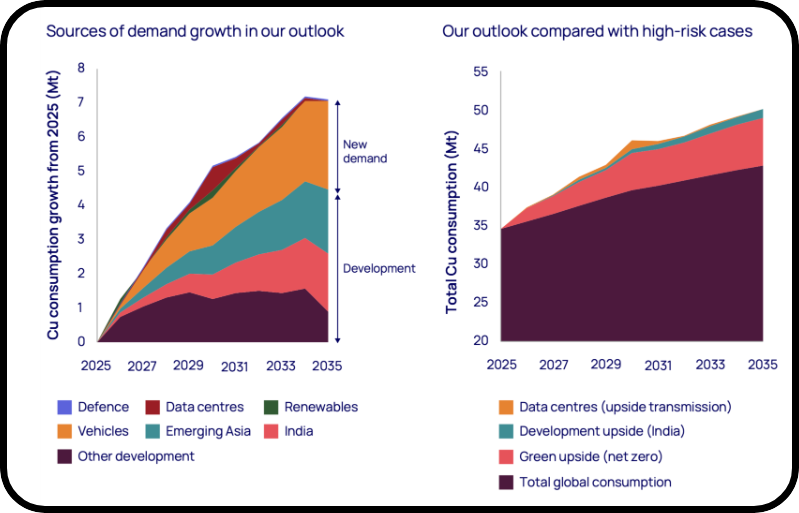
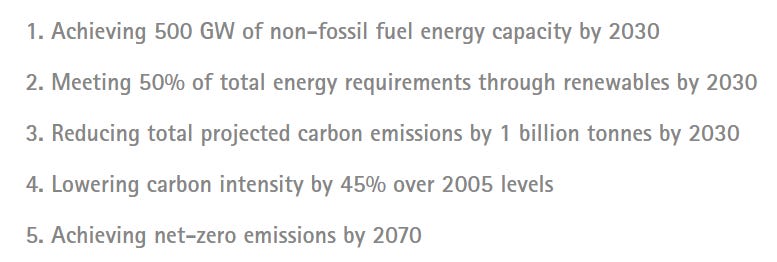
India alone wants 500 GW of renewable energy by 2032, 30% EVs by 2030, and $126 billion of data centres by the end of this decade.
Every one of those ambitions runs on copper.
So the obvious question is
Can the world simply produce more of it?
Well, the answer is not so simple.
When demand rises for something like a phone or a car, manufacturers can increase supply.
Copper does not work like that.
There are two reasons why.
Firstly, copper has to be mined from the earth.
In 1990, average copper ore grades at major global mines were 1.6%.
This means that for every 100 kg of rock miners dug up, they got 1.6 kg of copper.
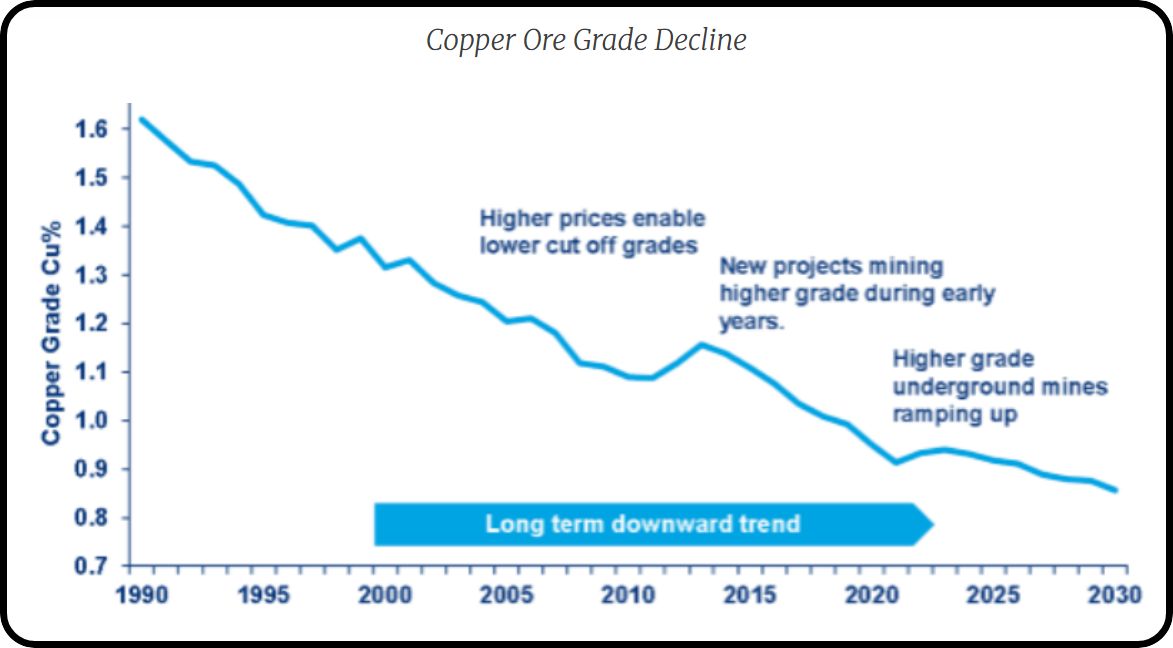
But recently, that number has fallen to around 0.8%.
Miners today are moving and crushing nearly double the amount of rock just to produce the same amount of copper as before.
That means double the fuel, double the water, double the cost.
And if you are thinking, why not just open new mines?
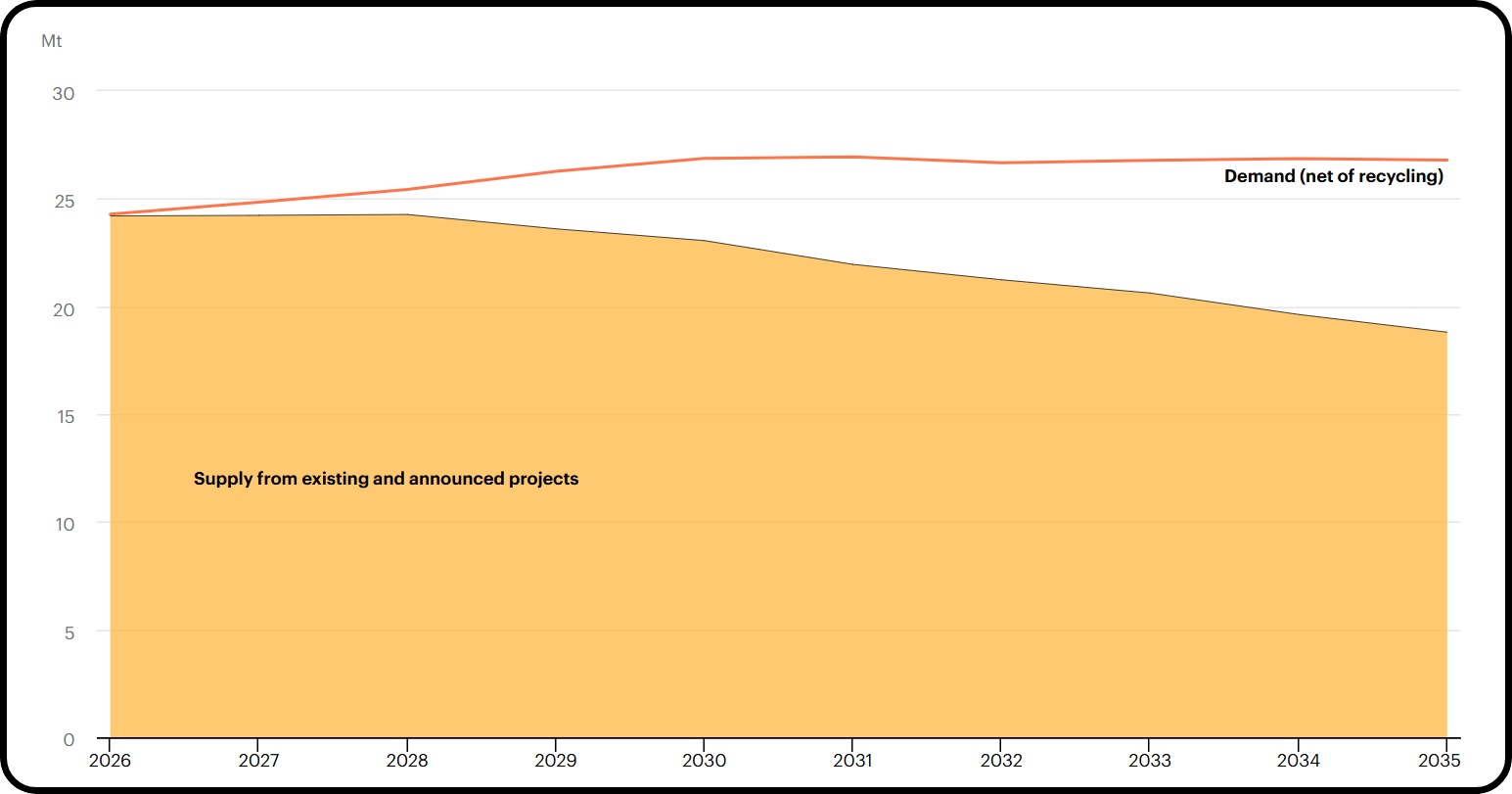
It takes an average of 17 years from discovering a copper deposit to actually producing copper from it.
And the future demand and supply data show a clear gap.
In between all of this, there is China
Even when copper is mined, it cannot go directly to a factory. Raw ore first has to be refined into 99.99% pure copper before it is actually usable.
And this refining step is mainly controlled by one country.
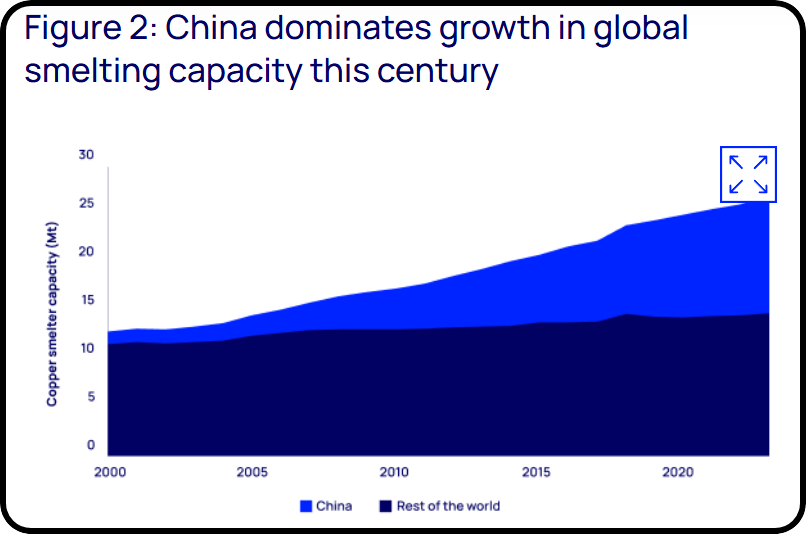
China controls over 50% of global copper refining capacity.
Four of the world’s five largest copper smelters are inside China.
Since 2000, China has built 75% of all new refining capacity added globally.
This creates a strange situation.
The United States mines significant amounts of copper but ships much of it to China for processing, because that is where the infrastructure exists.
Building competing refining capacity would take billions of dollars and decades.
So miners dig it out, China refines it, and everyone else buys.
Now Place India in This Picture
There was a time when India used to be a net exporter of copper, but fast-forward to today, and we are paying ₹1 trillion a year.
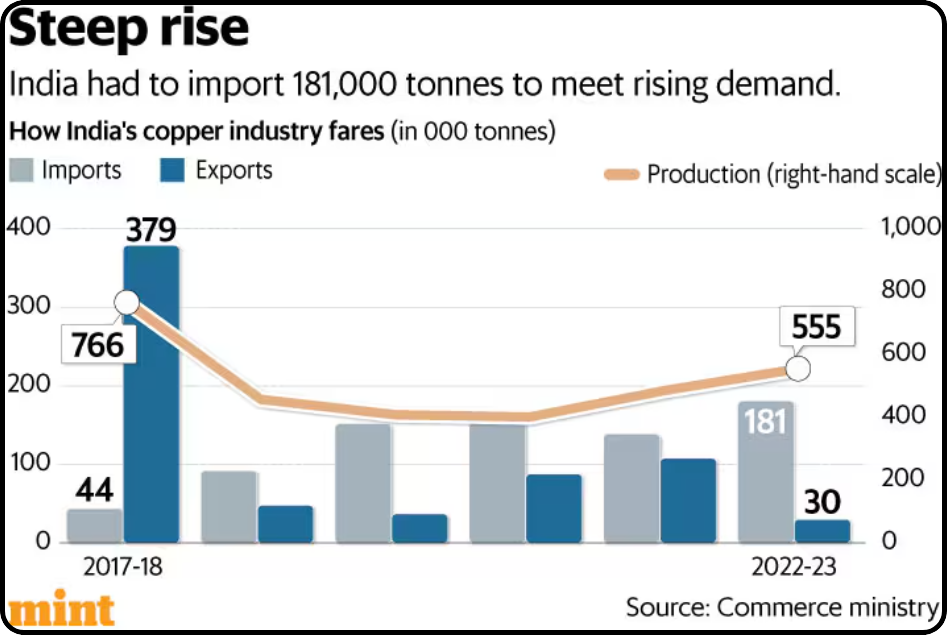
In 2018, the Sterlite Copper smelter in Tamil Nadu was shut permanently following protests over alleged pollution.
What closed that day was India’s second-largest copper smelter, with 400,000 tonnes of annual capacity, supplying 40% of India’s refined copper.
Within one year of the shutdown, copper imports doubled.
By FY26, India’s copper import bill had climbed over 350% in less than a decade, from Rs 22,856 crore in FY17 to over Rs 1 trillion.
So, what does the trend look like ahead?
India’s copper demand is projected to grow at over 6% every year through 2031, driven by EVs, solar farms, data centres, and new infrastructure.
And these are some of the targets which India wants to achieve in the future:
Goldman Sachs forecasts global copper prices at $15,000 per tonne by 2035.
Since India is a price taker, every rupee of that price increase is borne directly by manufacturers, builders, and consumers.
There is something worth sitting with here.
The RBI has been building up gold reserves for years. Why?
Because gold stored inside India cannot be frozen by anyone outside its borders, it can be locked away. It protects you.
Copper cannot be stored like that. It has to be bought continuously, at the world’s price, through a supply chain India does not control.
India is chasing clean energy, electric vehicles, and a digital future.
All at the same time. All of it runs on one metal.
After all this, I want to leave you with a question.
What does it mean to build a self-reliant future on a material you cannot produce yourself?
And if you enjoy understanding the forces shaping business, markets, and India’s future, you can subscribe below.
Kaam Ki Baat!

Here’s what I told them:
You usually don’t discover interest by thinking about it endlessly.
You discover it by doing the work consistently for some time.
Here’s a better way to figure it out:
Stop trying to decide only in your head.
Pick a company, read an annual report, track quarterly results, build a simple model, write a short analysis. A few weeks of real effort will tell you more than months of overthinking.Notice what happens after the excitement fades.
The first few days are interesting for everyone.
The real question is: Do you still feel curious when the work becomes slower and more detailed?See what kind of problems you enjoy solving.
Some people enjoy understanding businesses, some enjoy markets, while some enjoy numbers and valuation.
And some realise finance is not for them, which is also completely fine.Permit yourself to explore honestly.
You don’t need to force passion immediately. Sometimes clarity comes only after trying things properly.
Real interest usually reveals itself through repetition.
If you keep coming back to finance even after seeing the difficult parts of it, that’s a strong sign.
So don’t try to “feel sure” first.
Try the work seriously for a while; the answer usually becomes clearer through action.
MEME OF THE WEEK

What Else Caught My Eye?
RBI takes measures as the rupee nears 100 per dollar.
Recommendations
For this week’s recommendation, we’re sharing a recent conversation with global investor Ruchir Sharma. If you find macroeconomics a bit abstract, this is a great watch.
Sharma discusses the real-world impact of current trends, from AI to shifting global trade, without relying on heavy financial jargon.
Instead of making sweeping, dramatic predictions, he looks at what the data actually says about the economy right now.
It’s a straightforward discussion that helps connect textbook economic concepts to what is actually happening in the markets today.
Song of the Week
This is Parth Verma,
Signing Off.
Thanks for sharing this knowledge pack newslleters.
To answer the question in one line, our future growth is expensive and uncertain and yet it makes sense to pursue long term self reliant goal bcoz we are among the worlds largest consumers with growing aspirations for having better products and services.
If US is eporting its Copper to China for refining and the globe is buying from them, then India is not a unique case.
The Inidian Govt. has a lot to do when it comes to become self reliant.
To quote a few,
1.) India imports huge edible oil
2.) We can't be like Brazil who runs vehicle on E100 as the economics of producing ethonal in India will leave our country in vulnerable situation
3.) Falling currency is good for China but not for India as we are net importer
4.) Our electricity goal are dependent upon Oil & Gas imports that are disrupted for now
and many more things.
But what i thing is that India has a change to become a global power when it comes to energy.
I am saying this bcoz, India has a huge reserves of Thorium which can generate electicity for the next 400 years at a massive scale.
Ofcourse there are policy level and execution level problems, but if solved, we can do everthing what we want as a nation.
Would like to know readers thoughts on this!
14000 per tonne now, and predicted to rise upto 15000 per tonne by 2035? Thats barely a rise in prices.