

Will AI Replace Indian IT?

Our aim through TVS Weekly is to break down financial stories and concepts simply, explaining what happened and why it matters to you.
No jargon, no drama, just stuff that actually makes sense!
Curious? Get more from us on our Instagram, WhatsApp, LinkedIn or YouTube. Our 1 Million+ family awaits you!
In this week’s newsletter, we will be learning:
How AI is transforming Indian IT and what it means for the future.
My advice on what counts as real proof of work for finance roles?
About Status Quo Bias
Market Kya Keh Raha Hai Sir?
Imagine you have been working for the same company for years.
Then one Tuesday morning, your manager gathers everyone and announces that a new hire is joining the team.
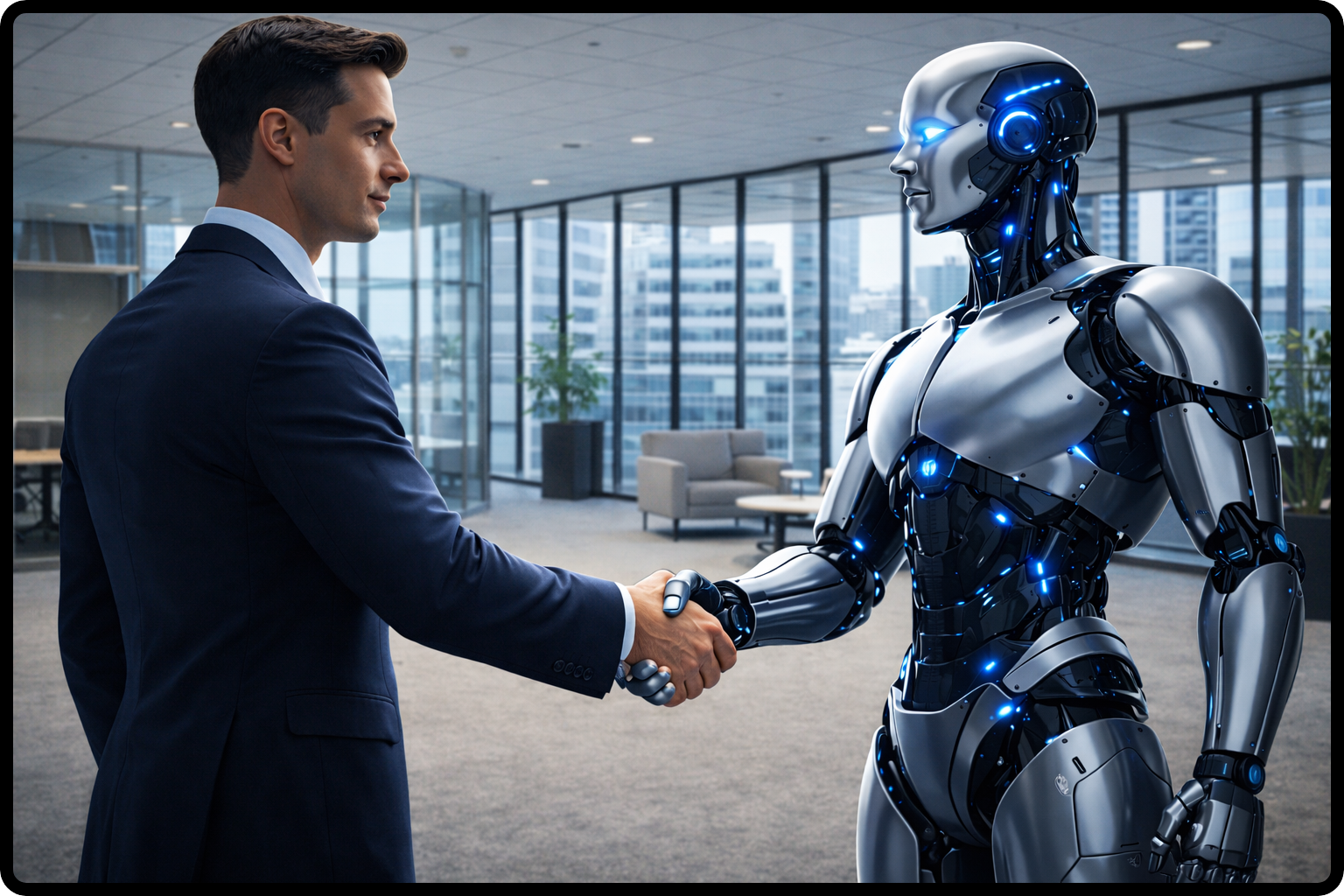
This new hire doesn’t eat. Doesn’t sleep. Doesn’t charge overtime.
And they can do in 20 minutes what your entire team does in a week.
Sounds like a script for a sci-fi thriller? Well, this is the reality that hit the Indian IT sector recently.
And just when people thought the IT sector was losing, a partnership between Infosys and AI company Anthropic was announced.
While the numbers and the panic may seem massive, this event presents a valuable opportunity for you to learn about how industries adapt to survive.
Let’s dive in!
The Great Indian IT Sector
To understand why a single AI update caused so much panic, we first need to understand how the Indian IT sector has historically been working.
The Transformation Nobody Wanted
For over three decades, the Indian IT industry has been providing services globally.
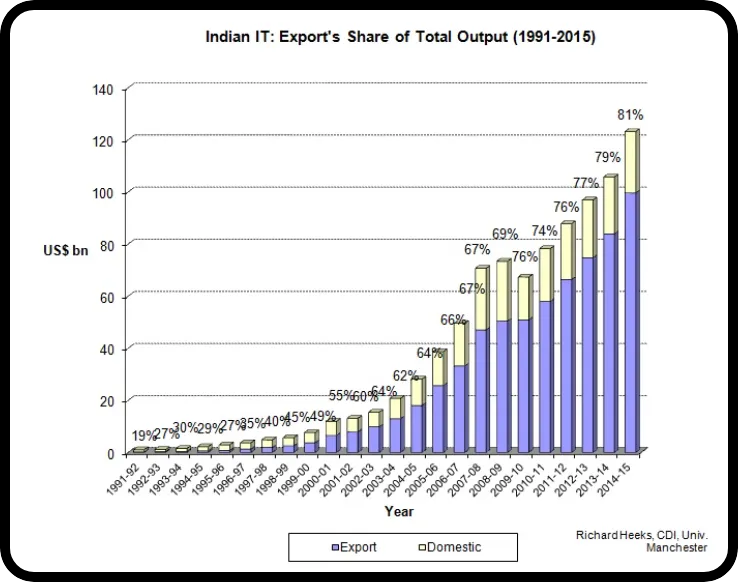
And they have scaled using a simple model.
Western companies needed software to build. India had engineers.
Indian companies built massive teams of junior engineers and analysts to do routine work, manual software testing, and compliance tests.
These were then outsourced to companies globally, requiring human resources.
This led to the rise of Indian IT companies globally.
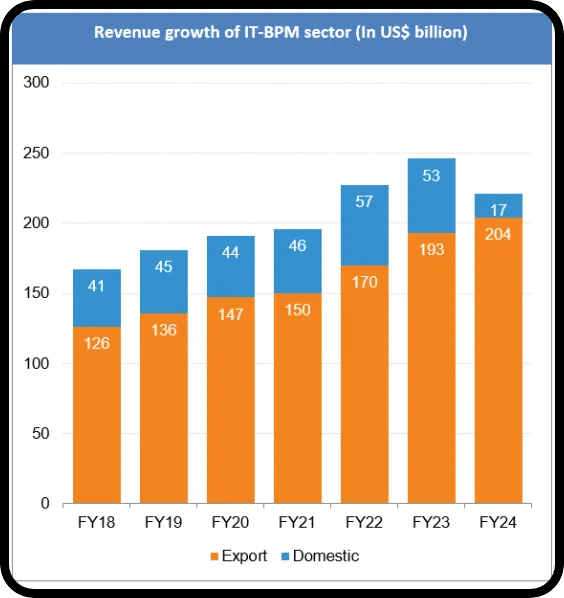
But this model is currently undergoing a structural transformation due to the rise of Agentic AI.
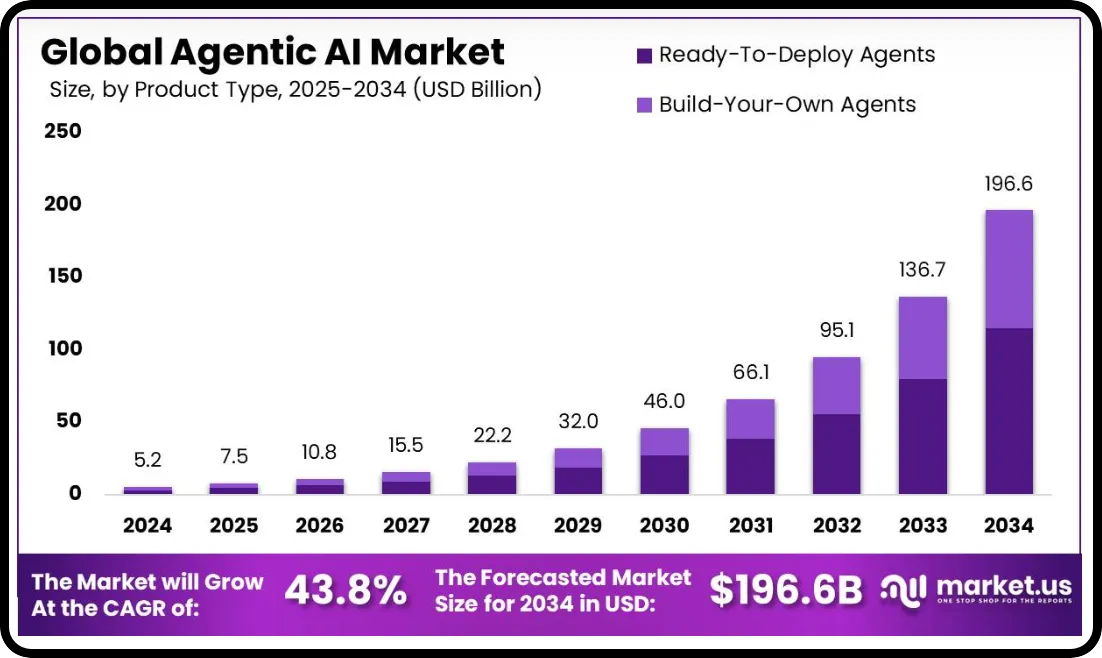
Unlike older AI tools, where you ask questions and get answers, Agentic AI systems don’t just answer questions.
Agentic AI are autonomous systems that can perform complex tasks, and that too with minimal human oversight.
As Infosys co-founder Nandan Nilekani recently stated, the ultimate goal of the tech professional is no longer just writing code, but rather “making AI work”.
The industry is being forced to transform from selling human effort to selling intelligent outcomes.
The SaaSpocalypse
This transformation wasn’t a slow, comfortable transition, and it hit the markets suddenly.
Recently, the AI firm Anthropic launched its model, Claude Sonet 4.6, and an enterprise tool called Claude Cowork.
It also comes with a feature called computer use.
This allows an AI model to navigate software, click icons, fill forms, and operate enterprise systems exactly the way a human would.
The AI simply looks at the screen and does the work.
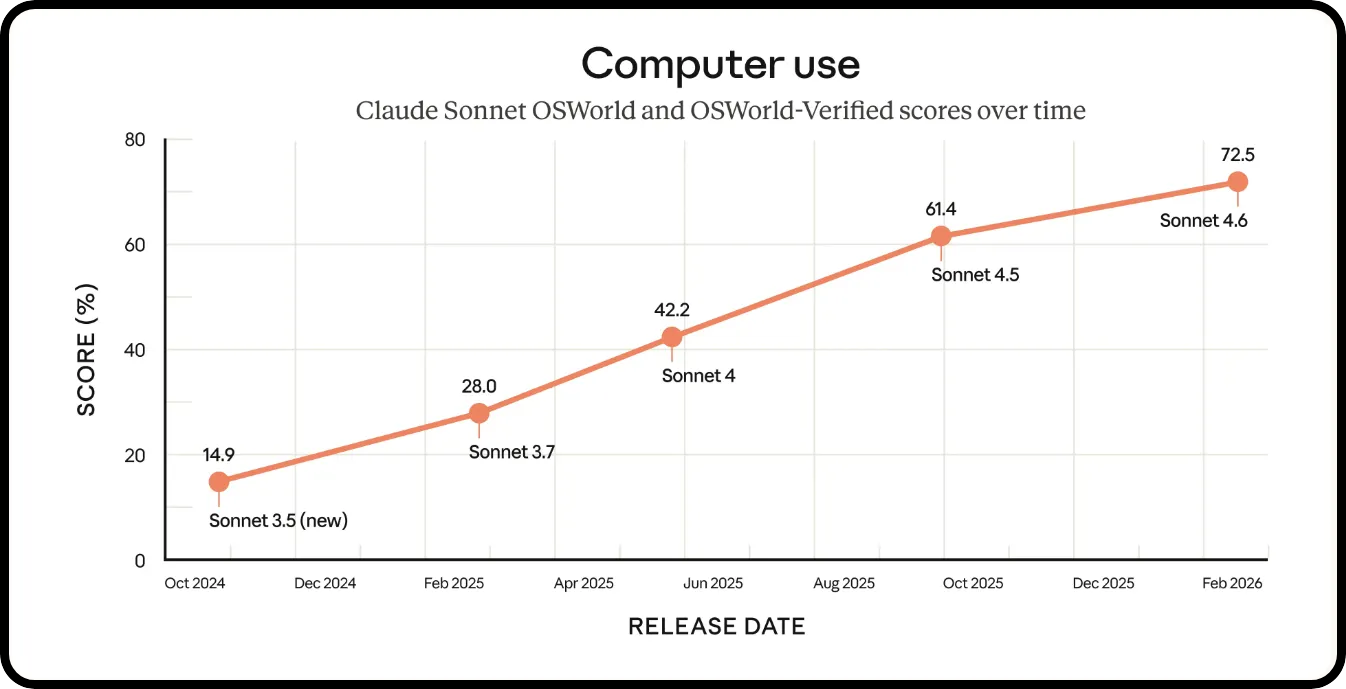
In October 2024, Anthropic’s models could autonomously solve about 15% of real-world software engineering tasks.
By February 2026, that number has jumped to 72.5%.
The market was quick enough to account for this update, and the Nifty IT Index lost over ₹2 lakh crore in market cap in just about 3 days.
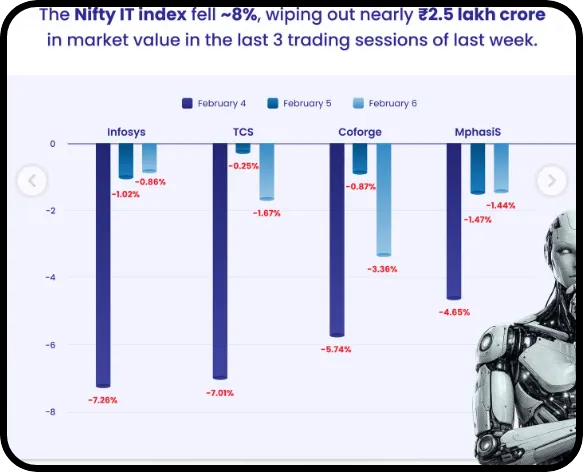
Investment bank Jefferies coined this event the SaaSpocalypse.
Which essentially means an apocalypse in the SaaS (software as a service) world.
If you can’t win alone, win together
Just when the markets were recovering from the AI shock, Infosys announced a strategic partnership.
Infosys & Anthropic join hands
In the midst of the market chaos, Infosys officially announced a foundational strategic collaboration with Anthropic.
On the surface, it might seem like a strange pairing as it comes from the same company that caused the chaos.
But there is an enormous prize ahead.
Infosys estimates that the global AI services opportunity will reach a staggering $300 billion to $400 billion by 2030.

To capture this, both companies are collaborating, with their core focus on Agentic AI.
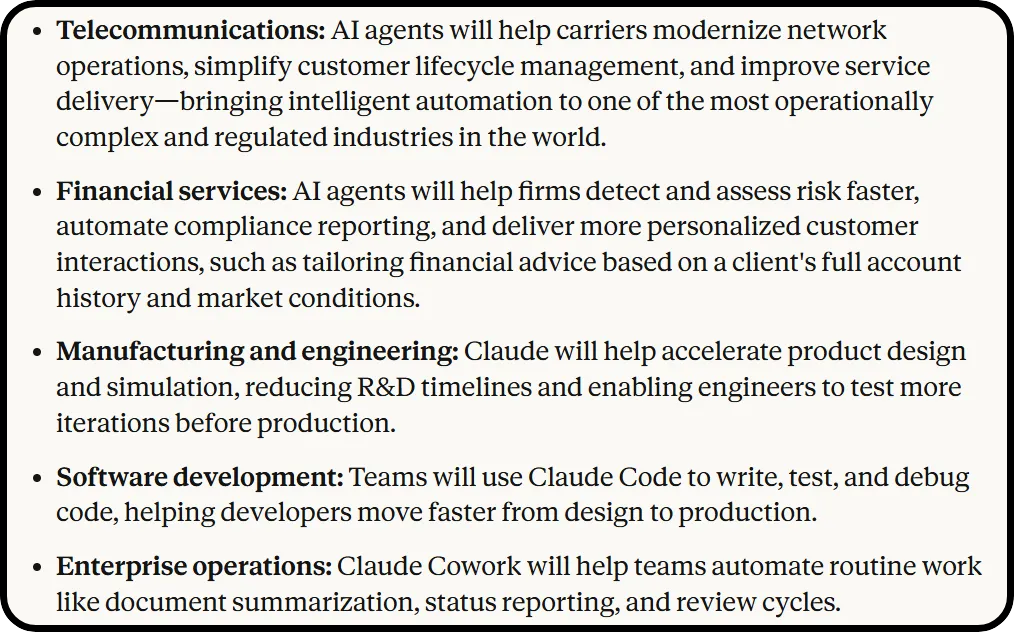
They are starting in the telecommunications sector and plan to rapidly expand into financial services, manufacturing, and software development.
We are Friends Now
This is probably what the companies must be saying to each other, as this partnership is built on mutual necessity.
The partnership gives Infosys access to advanced AI models and tools that allows them to deliver AI-based transformation services to global clients.
Anthropic, on the other hand, has cutting-edge AI models, but they lack the experience required to integrate them into complex corporate environments.
And this was openly stated by Anthropic’s CEO Dario Amodei.

That is exactly where Infosys steps in, along with its “Topaz” AI platform.
It combines AI models, data services, cloud capabilities, and domain expertise to help companies actually use AI inside their existing systems and day-to-day operations.

Topaz also uses a star shield framework that addresses the data privacy and regulatory concerns of Anthropic.
Coming Back to Reality
Now, before this starts to sound like an Infosys investor presentation, let us take a step back.
Life is Unfair
There was a time when Indian IT professionals worried about 72-hour workweeks.
Now, that concern seems to fade away.
As Anthropic’s own CEO has warned, up to 50% of entry-level white-collar jobs could be severely impacted within five years.

Meaning, roles like junior accountants, entry-level coders will soon be taken away by AI.
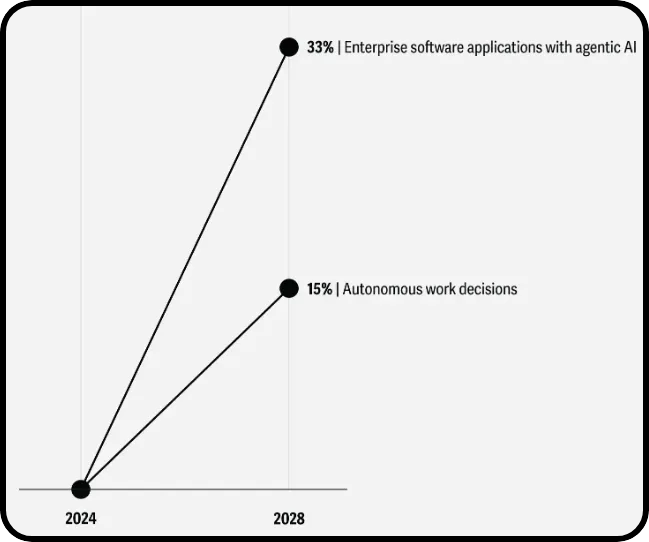
And while AI innovation is moving at lightning speed, the enterprise’s readiness to adopt this is severely lagging.
This is called the Deployment Gap.
And a study reveals that while 80% of Indian enterprises are exploring agentic AI, only 11% have successfully deployed it in production.
One of the key reasons for this gap is attributed to security concerns.
This is also highlighted by the UK Information Commissioner’s Office, that Agentic AI can bring data protection risks.
And if you thought this was going to be an Infosys-Anthropic exclusive, think again, because,
TCS and OpenAI have also joined hands
This partnership also follows a similar pattern.
An AI model company like OpenAI, working with an enterprise giant like TCS, to bring those models into real-world use.
They are also building AI infrastructure in India.
Starting with a 100MW capacity data centre, they have the option to scale it up to 1GW to power next-generation AI workloads.
On paper, the scale and ambition of these projects look extraordinary.
But it’s ironic how we celebrate AI’s massive potential, yet two of its biggest leaders couldn’t manage a simple handshake.

The race has started. The stakes are enormous.
And India, after three decades of executing for others, is now competing to own the future it helped build.
This is not the end of Indian IT.
It is the end of Indian IT as we knew it.
Kaam Ki Baat!
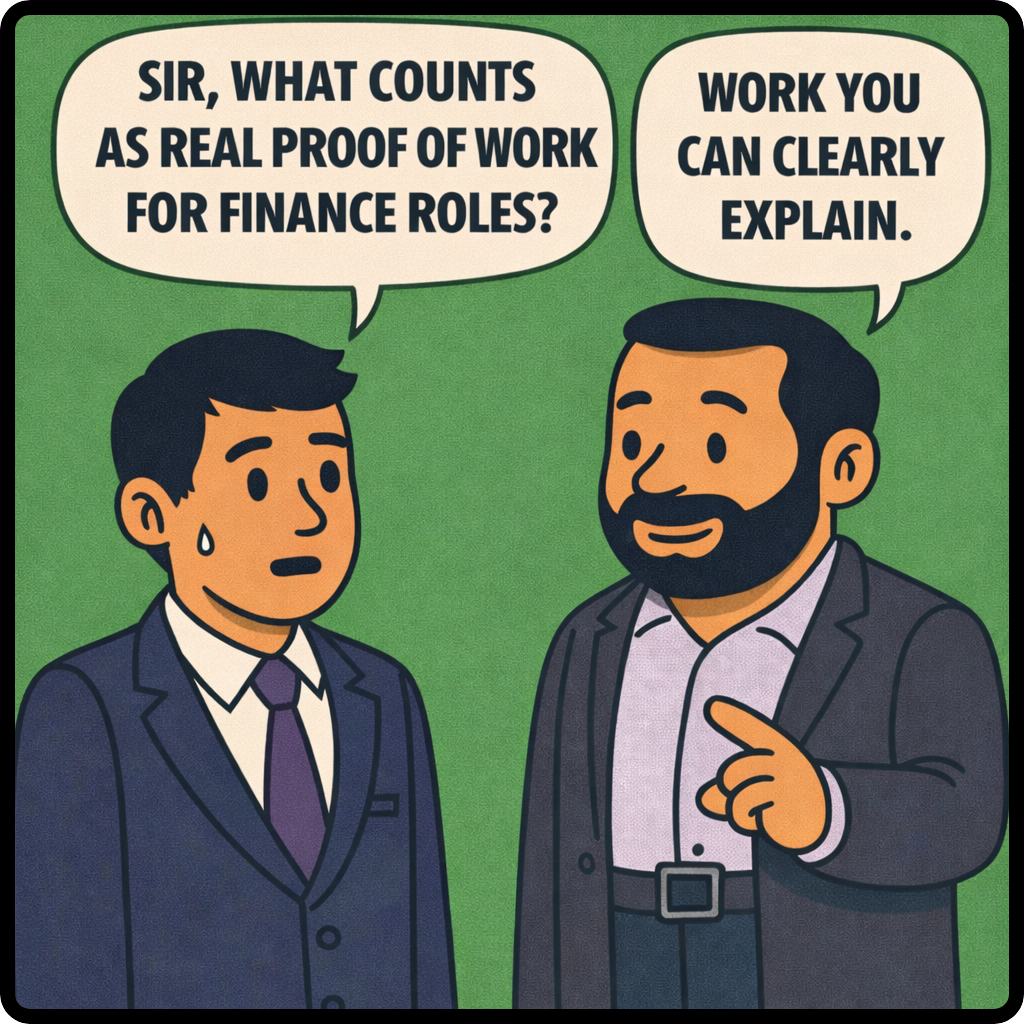
“Sir, what counts as real proof of work for finance roles?”
Here’s what I told them:
In finance, only interest doesn’t count.
Evidence does.
Real proof of work is anything that makes them believe:
“This person has actually practised the skill.”
Here’s what counts:
A company analysis you wrote yourself.
Business model, key drivers, financial trends, risks, and your conclusion. Even one good company is enough.Tracking a company regularly.
Reading concalls, watching quarterly results, writing down what changed. This shows seriousness more than random projects.A model you built yourself.
Even if it’s simple, if you understand it and can explain it, it counts.A mistake you caught and corrected
If you can say, “I built it wrong first, here’s what I fixed and why.”
That’s real learning, and recruiters respect that.
If your work shows that you can observe, analyse, and think clearly, you will stand out, even as a fresher.
Dalal Street Dictionary
Imagine you’ve been using the same bank account for years.
You know there are better options with lower charges and higher interest.
But you don’t switch, not because you have compared everything and decided rationally, but because changing feels like effort.
That tendency to prefer “how things already are” is called Status Quo Bias.
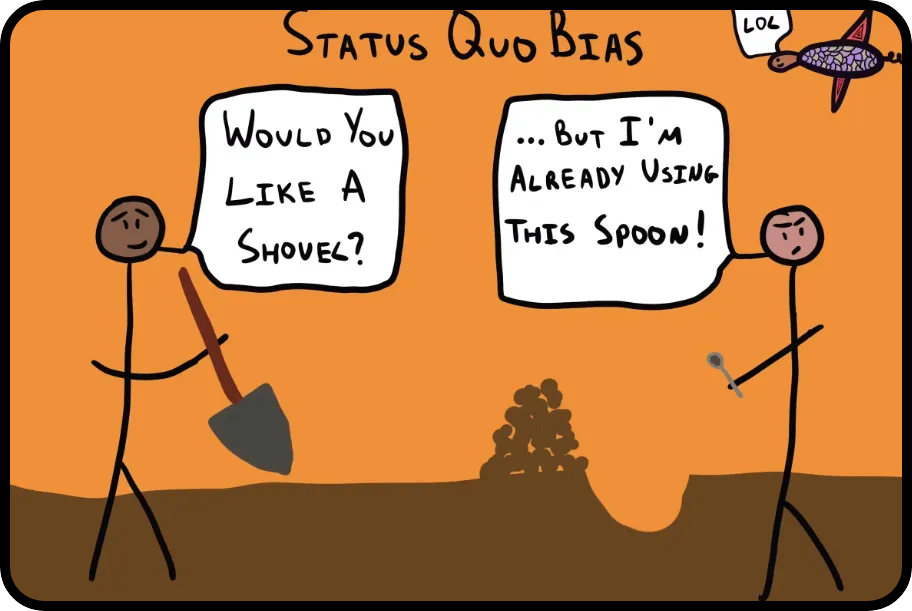
In behavioural economics, Status Quo Bias refers to the tendency to stick with current decisions, habits, or choices simply because they are familiar, even when better alternatives may exist.
A common real-world example can be seen in retirement or provident fund investments. Many employees remain invested in the default allocation provided by their employer or fund manager. Even when age, income, or risk tolerance changes, they do not review or adjust the allocation. The decision to continue is not necessarily wrong, but it may not be actively evaluated either.
In financial markets, investors may continue holding the same asset allocation or financial products for years without reassessing whether they still align with their goals.
Status Quo Bias does not mean change is always better. It simply highlights that maintaining the current option is often the default behaviour.
MEME OF THE WEEK

What Else Caught My Eye?
Investors want to buy Welspun’s green energy arm.
Stable Money raises $25 million.
Meta partners with NVIDIA to build AI infrastructure.
Adani Group to invest $100 Billion in AI data centres.
Recommendations
As students, we are constantly preparing for the next exam, the next internship, the next milestone. In that rush, we rarely think about who we are becoming in the process. This talk explores that space.
The gradual and sometimes uncomfortable journey of growth and self-understanding. It doesn’t offer shortcuts or dramatic solutions.
Instead, it presents a perspective worth thinking about, especially if you’re navigating uncertainty, ambition, or change. Take a few minutes to watch it, and more importantly, to think about what it means for you.
Song of the Week
This is Parth Verma,
Signing Off.
Sir very informative post It helps us to not fear to AI rather than that use AI in our favour. Don’t know what will happened in the future but it seems very exciting to see competition between AI giants 😁
https://www.instagram.com/reel/DVLZTfxEz_9/?igsh=MTlibzM4cHdkbjF3eQ==
What’s your thought on this, can you give me your opinion please on claude ai 25.02.26 update saying taking over according and investment sector?
Like IT-Sector is Finance sector also at risk of ai take over.